A little less than two weeks
left until the sixth Russian
PyConRu . The conference will be held on July 22-23 at the Cronwell Yakhonty Tarusa hotel, 95 km from Moscow (there will be a transfer to the venue and back).
Now in the program 25 reports and 3 workshops. In addition, for the first time in Russia, we will hold the Core Development Panel. Three Python Core Developer: Yuri Selivanov (EdgeDB, Canada), Andrey Svetlov (aiohttp, Ukraine) and Christian Heimes (Red Hat, Germany) will answer any questions from the audience: about the future of python, about problems, the community and everything interests you. In general, prepare questions, it will be interesting!
Well, now is the time to look at the
program and register if you put it off. Under the cut short about all the reports of the conference.

PyCon Russia 2018 Program
 Yuri Selivanov
 (Toronto) -
Python Core Developer , expert software developer, founder of EdgeDB, author uvloop, asyncpg, asyncio. Yuri advised Cisco, Pinterest, ABB, Nintendo and other companies. His software is used to improve the performance of companies such as Facebook and Instagram. At PyConRu, Yuri will give a talk "Asyncio Today and Tomorrow."
 Python Core Developer
 , author and active participant in many Python libraries, including asyncio, aiohttp, aiopg, aiozmq, PyCon Russia program director
Andrei Svetlov (Kiev) will give a talk on “Aiohttp from the author”. Andrey will tell about the current situation, describe plans for the future and give advice on the correct application.
 Christian Heimes
 (Hamburg) -
Python Core Developer since 2007, Senior Software Engineer at
Red Hat , a member of PSF. Christian will make a presentation on “SSLError, now what?”, In which he will briefly talk about the basic cryptographic primitives, the handshake protocol, the internal structure of certificates and the public key infrastructure. You will learn about best practices, debugging tools, and TLS / SSL diagnostics, and how to manage certificates.

Another conference headliner is
Yelp tehlid, one of the Swagger / OpenAPI developers
Stephan Jaensch (Hamburg). Stefan will give a talk on “Type annotations with larger codebases”, which will tell you how to start using annotations, how to get the most out of annotations and how to avoid the problems that appear when you start using them.
 Melanie Warrick
 (San Francisco) - Senior Developer Advocate on
Google Cloud . Prior to this, Melanie was the founder and developer of DeepLearning4J (an open source Java platform), and also worked on machine learning at Change.org. At the conference, Melanie will make a presentation on “Reinforcement Learning”
 Alejandro Saucedo
 (London), head of development at
Eigen Technologies , CTO at Exponential, specialist in artificial intelligence and machine learning, will give a talk on "Industrial Data Pipelines with Python and Airflow". This report will use practical examples to figure out how to set up machine learning using Airflow.

The head of the PyCharm Community in
JetBrains, Andrei Vlasovskiy, will talk about 7 code editing techniques in the PyCharm environment that are impossible or difficult to implement in text editors. These techniques perform actions not on strings, but on Python syntax and semantic structures: variables, expressions, functions. Andrei will explain if this allows editing the code faster and what disadvantages this approach has.

Head of Data Science at
ScrapingHub Mikhail Korobov (Yekaterinburg) will talk about how machine learning can be used to write smart web spiders. There will be examples from practice, including examples of using Deep Learning and Reinforcement Learning; Michael will also talk about the available Open-Source components from which you can assemble such smart spiders.

An engineer at
Aiden.ai Ling Zhang (London) will give a talk on “NLP to Discover Rich Insights from Massive Noisy Text”. “In this talk, we’re a rich, actionable insights for a government entity. We reduce time from month to minute. We’ve been learning how to learn and learn how to use it.
 Kate Heddleston
 (San Francisco) is a software engineer in
Shift Technologies (a trading platform for buying and selling used cars), where she is involved in python projects, founder and CEO in Opsolutely (a platform that helps engineering teams deploy infrastructure in the cloud). Keith will give a talk on Technical Debt and Python.

The developer in
Mail.Ru Vadim Pushtaev will tell how they write unit tests in the Search. From trifles: how to name, what is the structure of each test, etc., to big questions: how are things with TDD, how to get wet, how to deal with external systems such as databases, how they live with fixtures, why you need to test private methods and the like .

Python has excellent capabilities for integration with C-language code. This allows you to optimize performance-critical functions at low cost, while maintaining flexibility.
Sergey Borisov, technical development manager at
DomKlik, will conduct a “Cython - C programming for people” workshop, which will show what tools you can use to solve such problems, and write an asynchronous client with a simple protocol together with the participants of the workshop.

The developer of Alice from
Yandex, Marina Kamalova, will tell you from which python components you can create a text chat bot, what happens from the moment you receive a custom message to the moment you receive a response from the bot (NLU, NLG, ML classifiers), how to adapt the bot messengers and not only messengers, as well as how to increase the resiliency of the bot on the example of the Telegram API.

In the past, data scientist and machine learning engineer at EasyTen and University College London, now
Vitaly Davydov , CEO at
Poteha Developers, will give an example of Serverless microservice with Python in the report. After a small theoretical part, Vitaly in live mode will deploy the simplest service on AWS Lambda and test it.

The director of development at
DomKlik , a teacher of industrial programming courses and the theory of programming languages at MIPT, will tell
Alexey Kuzmin about the strengths and weaknesses of asynchronous programming, show how this mechanism is arranged inside Python. Will review several useful libraries and tools. In the end, talk about how to properly measure and debug asynchronous code.

The tech in the
Avito Dmitry Khodakov will tell about typical problems and pitfalls when building a loaded microservice framework; about profiling asynchronous applications; the fundamental differences between the asynchronous tornado and aiohttp; and hold an honest comparison tornado vs aiohttp in conditions close to combat. The report will be useful to experienced Python developers who deal with asynchronous and microservices that are faced with the problems of scaling and debugging asynchronous applications.
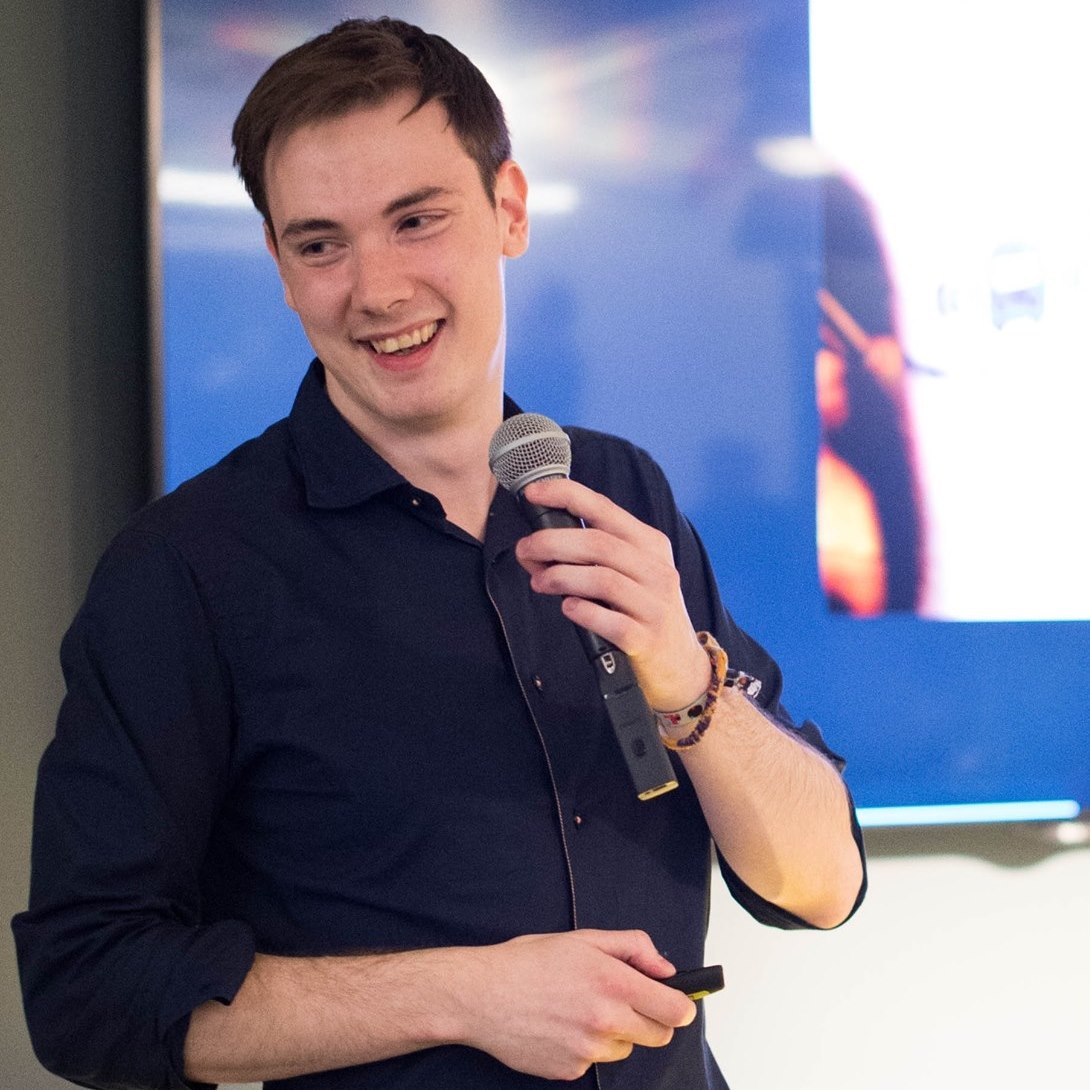
Senior Software Engineer at
Engineers Gate Donald Whyte (London) will give a talk “Engineers Gate High Performance Data Processing in Python”. "This talk explains how to use large amounts of data quickly. We show an example dataset being processed using numpy / pandas. "We’ve been able to meet these requirements for several times to seconds."

Python is not just about web and asynchrony. Python-developer in the
Laboratory of Design of Intelligent Systems Alexander Menshikov (Komsomolsk-on-Amur) will hold a master class "Robotics with Python and ROS". Together with the participants, Alexander will make out how, from a simple data exchange module, you can come to a prototype autonomous turret that can search for a target and notify the status of the shot without the operator’s help.

Technical Director at
Marilyn System Evgeny Slezko (Moscow) will share his experience in implementing service-oriented architecture in a system that has been developed in Python for more than 5 years. Why do you need it? What problems solves, and what creates? What is worth taking care at the beginning? What is the profit from the point of view of both the engineer and the management of development?

Every day we work with relational databases: we change objects, roll migrations, create indexes. But sometimes you need to aggregate data across several fields or you want to try out the latest capabilities of relational databases, for example, the Union operator. Django or PeeWee can only express simple things, so you have to use raw SQL. But the SQLAlchemy library can express any complex query in pure Python. This allows you to write clear code and refactor it with ease.
Denis Kataev (Ekaterinburg), a developer at
Tinkoff.ru, will explain with examples how SQLAlchemy works from the inside, how it simplifies the work and when it is worth using it (the spoiler is always).

Everyone who is engaged in professional development on anything wants to make their daily activities more comfortable. This is clearly seen in the number of tools that are available to developers: their arsenal is growing every year. At the same time, as elsewhere, there is no silver bullet: to achieve what you want, you have to dig them all for a long time, select the right combination of tools for yourself and “be friends” with each other. CTO in
Spherical Anton Patrushev (Yekaterinburg) will share an excellent combination of tools that they found in Spherical almost from the very beginning. Anton will talk about this, touching upon key aspects and nuances of various mechanisms of their environment.

Python-developer at
TsIAN Maxim Mazaev will talk about the principles of developing microservices at TsIAN and how they deal with the typical problems of their support - versioning and consistency of the API. How to change the API without breaking anything. How to control consistency through the CI system. Maxim will also consider issues of code generation and swagger-schemes.

Usually, all participants in sports programming use C / C ++ / Java, but in the last decade, a growing number of participants use Python. Python-developer at
Toptal Andrei Soldatenko (Kiev) will tell you how to start participating in competitions using Python. Andrei will show how to motivate yourself in practice, how to determine the class of the problem and how to solve it. It will tell you how to master the art of testing, and also explain how to quickly assess the complexity of your solution without a lot of evidence and mathematics in order to get the desired AC (Accepted).

Docker has become the de facto standard for the distribution and deployment of applications across all platforms. One of the tasks that a developer faces when using Docker is how to make assembly quick and efficient. Alas, python libraries are still often distributed as source code, and building a project requires some system dependencies. After a successful build, these dependencies often remain in the image and increase its size, although in fact they are no longer needed. Python-developer at
Yandex Alexander Koshelev will tell you how they solved this problem: build images without build dependencies. Images as a result turn out more lightweight and, as a result, deplolyatsya faster, and therefore reach users more quickly.

Researchers in the laboratory of neural systems and deep learning at
MIPT Valentin Malykh and
Aleksei Lymar will conduct a workshop called DeepPavlov: an open-source python library for dialog systems. At the workshop, the guys will learn how to make your chat bot, show you how to work with data for learning the interactive system and how to use the ready-made models available in the DeepPavlov library.
 Sergey Karpovich
 and
Vadim Berezkin from
mos.ru will tell you how to make a search engine convenient for users: about available tools and how to customize usability, quality and relevance of internal search using the example of Elasticsearch and Python. The report will be useful to developers of search engines for sites and portals.
Full abstracts of all reports and a grid with a schedule - on
the conference website .
check in
This year there were more people willing to participate in the conference than places at the base, there are no more vacant rooms on Tarusa. You can buy a ticket without accommodation for 13 500 rubles. The ticket includes everything except accommodation: participation in the conference (2 days), lunch and dinner on July 22, breakfast and lunch on July 23, all coffee breaks, entertainment, buses from the Annino metro station to the conference venue on July 22 and back July 23rd.
You choose where to spend the night, pay by yourself and get to the place of the night. This option will be useful if you are driving your car or if you like to take a taxi and not depend on the general transfer.
Some options where you can stay for the night, we listed
on the site . In addition, you can take a tent and spend the night in it on the territory of "Tarusa".
Registration and all details on
the conference website .
Thanks to our sponsors who make the conference possible: a gold partner -
JetBrains , silver partners -
MediaScope ,
Kaspersky Lab ,
Marilyn ,
Megafon , a positive wave sponsor -
TsIAN , a technical partner -
Mail.ru , a bronze sponsor -
Yandex , a water sponsor -
Avito and the afterparty sponsor -
Sirena-Travel .