Greetings to all interested!
I present to you the description of a study on the motivation to take part in the hackathon. Not for the sake of advantages, but in order to satisfy the interest of those who wish (and to amuse their ego, of course), I write this text.

Briefly who am i
Student Graduate School of Culturology HSE. And actually graduate helped me successfully defending a thesis.
How I came to this study
Like any other student, I until the last set aside the moment of searching for a topic for a diploma. After all, undoubtedly, three hours spent reading the origami folding manuals will be much more productive than reading scientific articles to search for at least the field (not to mention a specific topic) for research. And, nevertheless, during the discussion of pressing issues with my girlfriend, after the n-th number of memes and questions in the spirit of “why do we need it all?”, I approached the fact that it would be interesting for me to study the actively developing area - technology, and in particular, Big Data. But the first question arose - how to tie it to cultural studies?
And then came the stupor (regular). I was advised to direct my gaze towards the ethics of using a large body of data. But where is ethics and where am I, I thought, and abandoned this idea. Meanwhile, search engines with a capital letter, as felt, and offered me contextual advertising - "take part in competitions in Data Science." And it came to me. Hackathon. Here it is - a new cultural practice, a new type of interaction of people, a new way of finding solutions. Something frighteningly technical for the humanities, I immediately alerted. But then I argued (yes, to myself) that cultural studies is not a narrow specialty, it is not only about sad dusty books, it is also "here and now." This is about what is relevant today. After all, this phenomenon is increasingly embedded in our everyday life. Once upon a time, this could be considered the lot of reclusive programmers. Now this is what becomes a part of our culture.
So, we figured out the field, but still there is not enough concrete. And in order to at least a little interest the management, I rushed into the field of pragmatics - I wondered how useful participation in the hackathon was when hiring. Approximately with such a blurred theme and eyes full of despair, I went to my supervisor. Having laid out all the cards on the table, and mentally preparing for the lynching of my topic, I was surprised to find that the supervisor not only supports her, but is also interested in it. The direction, however, had yet to change, and for the better - in the direction of expansion. As a result, we came to the conclusion that it would be interesting to explore the motivation to take part in the hackathon. Eyes immediately lit up, my heart began to pound, my thoughts began to turn in search of the necessary tools. And, of course, where it comes to a large number of people, one cannot do without sociology and its methods. It was then that we decided to resort to all the well-known and beloved survey.
Fairy tale soon affects, but not soon it is done. My primary enthusiasm was just enough to watch the next Mr. Robot series. However, the next day, inspired by yesterday's X, I sat down to write burning questions. And there was something not quite "awkward", rather similar to the questionnaire for schoolchildren. Then I decided to seek help from my fellow sociologist. He listened to me with pleasure, looked at my version of the questions, smiled condescendingly and sent his edits. How pleasant it is to work with professionals, people who know and love their work! All comments were careful and to the point, all of them I took into account.
Inspired by my achievement (a vord with questions), I went to pester my colleagues who participated in the hackathon. And, like a true dinosaur, threw off their paper, to fill. How I was pleased with myself. Until I remembered (with the help of a hint from my acquaintances) that great people invented such a beautiful thing as Google.Forms. I quickly ("Blitz, speed without borders") rushed to make (for the first time in my life, seriously) an online form. Everything turned out to be not as scary as it seemed, and in 20 minutes I managed to put aside one and a half months.
Next came the question of how to distribute the link. And here the thematic sources of the VKontakte communities and thematic Telegram channels became the main source, in addition to this, the distribution from Infoculture came to the rescue.
What did you manage to come to in the end?
As a result, the total number of participants who completed the survey was 26 people. Maybe this may not be enough for someone, but size is not the main thing! And then, this is my first (and in general in the Russian community), so: what the rich are, they are welcome.
So, let's move on to the most desirable - the survey results (yes, finally there will be picchas). A simple listing might seem dry, but I left all the water in the diploma.
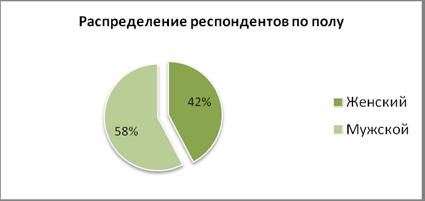 Fig. 1. Distribution of respondents by gender
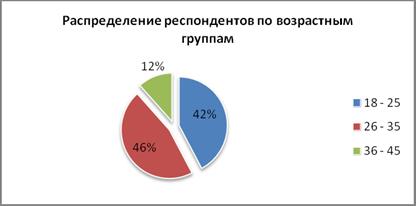 Fig. 2. Distribution of respondents by age groups
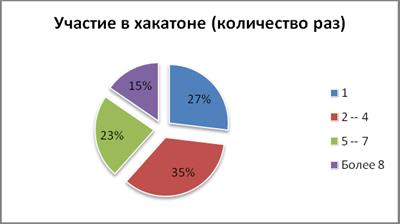 Fig. 3. Frequency of participation in the hackathon among the respondents
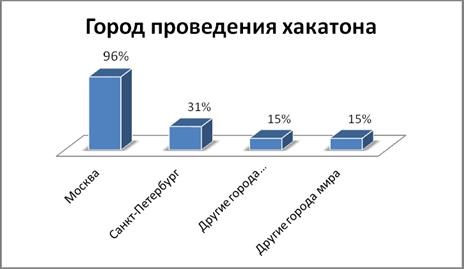 Fig. 4. Frequency of participation in the hackathon in a particular city
 Fig. 5. Subjects of hackathons in which respondents participated
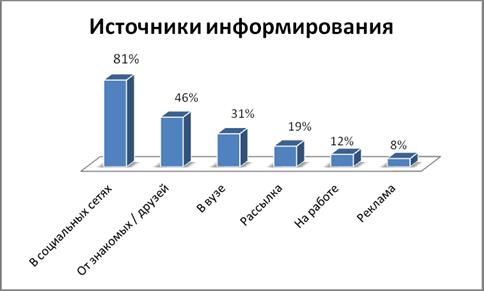 Fig. 6. Sources from which respondents received information about upcoming hackathons
 Fig. 7. Methods of preparing respondents for the upcoming hackathons
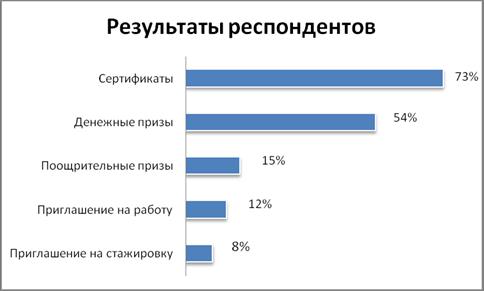 Fig. 8. Results of participation in the hackathon among the respondents
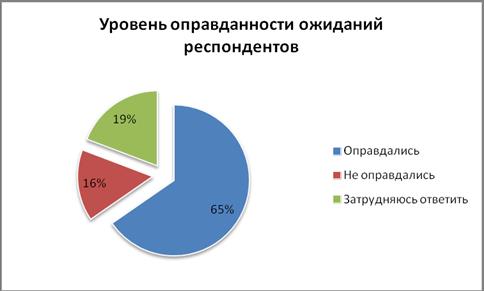 Fig. 9. The level of justification of the expectations of respondents.
 Fig. 10. Level of satisfaction with experience of participation among respondents.
 Fig. 11. Respondents' assessment of the degree of influence of participation in the hackathon on their career.
One of the key parts of the survey is the part dedicated to the questions of motivating participants. Seven key (according to preliminary studies) aspects were identified that could in some way encourage people to take part in the hackathon.
Respondents were asked to rate on a scale from 1 to 10 (where 1 is “absolutely NOT important” and 10 is “extremely important”) the level of significance for one or another factor when they decide to participate in the hackathon.
As a result of the calculations, an average weighted value was obtained for each indicator in the ranking from 10 to 100.
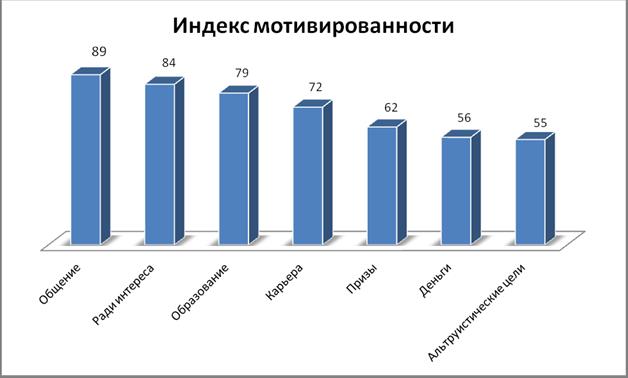 Fig. 12. Index of motivation by various aspects of the hackathon
For a more complete picture of the motivating aspects, it is necessary to add data on the pros and cons in the hackathon format of its participants to the results of assessing the importance of certain factors. The main advantages were highlighted:
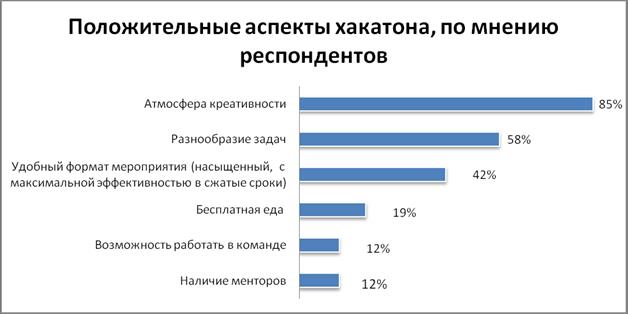 Fig. 13. Positive aspects of the hackathon, according to respondents
The list of major cons is as follows:
 Fig. 14. Negative aspects of the hackathon, according to respondents
What does all of this mean?
As a summary of the survey is to highlight several important points:
- The level of awareness of the hackathon participants about the meaning of this term is high and coincides with the given definitions from the literature;
- The high level of attendance and the availability of preliminary preparation for the hackathon by its participants indicates a high degree of their involvement in this event, which goes beyond the chronological framework of its current holding;
- The level of satisfaction with the event does not correlate with material gain, but with emotional feelings caused by the presence of new social connections and interesting tasks;
- The most popular primary factors that motivate them to take part in the hackathon are: communication, interest, education. Secondary - creative atmosphere, a variety of tasks, convenient format of the event;
- The factors rated by the respondents as the most negative are poor organization of the event, stress (psychophysical), and a large amount of work.
- Respondents identified the following main methods for training: studying information about the upcoming hackathon and team discussion;
- The applicability of the skills obtained during participation in the hackathon was noted by the majority of respondents.
At the end, the results of the comparison of the results obtained among the Russian participants of the hackathons with the results of previous studies presented above are presented.
- One of the distinctive features of hakatons in Russia is the larger percentage of women participating in male participants.
- Differences in motivation for participation are not strongly pronounced, in all studies the possibility of improving skills is assessed as an important item, while networking is in second place. In Russia, the situation is the opposite, in the first place is the need for communication, and only in the third place is the importance of training.
- Altruistic reasons noted in foreign studies as important did not find such a high response in the Russian community.
- The disadvantages and advantages highlighted by the participants of both “parties” are also similar (except for the possibility of self-promotion and promotion noted by foreign participants).
- Just as with foreign ones, Russian participants have an interest in the event and a focus on further participation.
Congratulations, you have read this sheet to the end, for which I am very grateful to you!